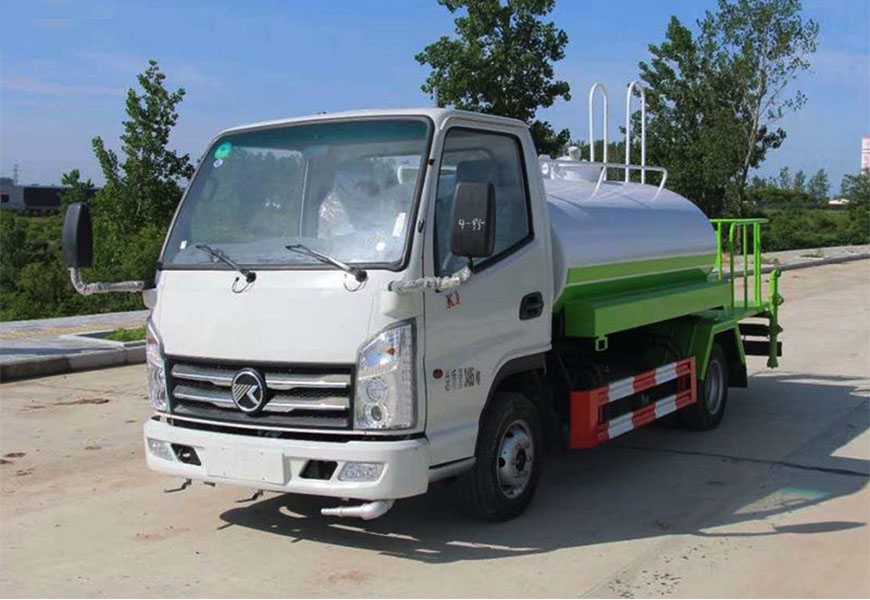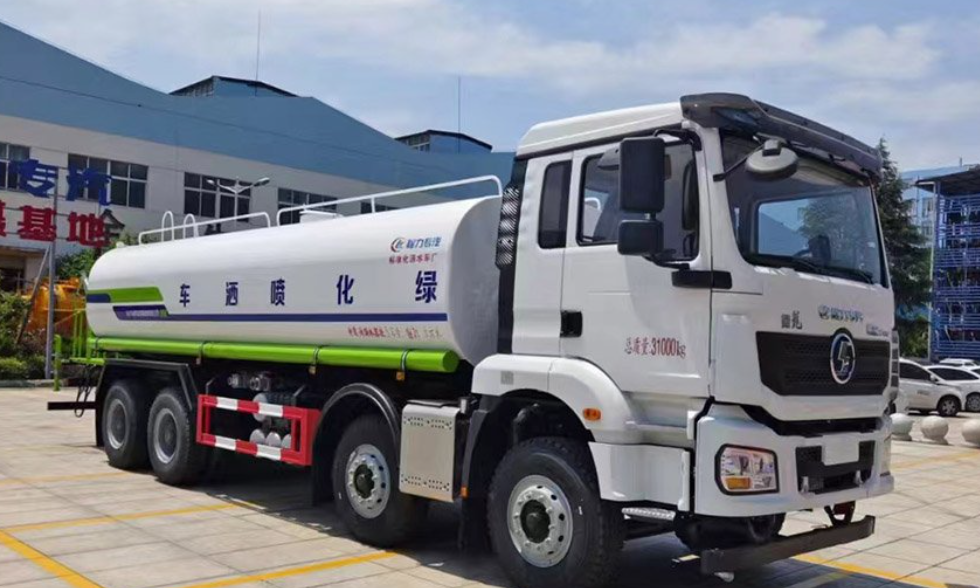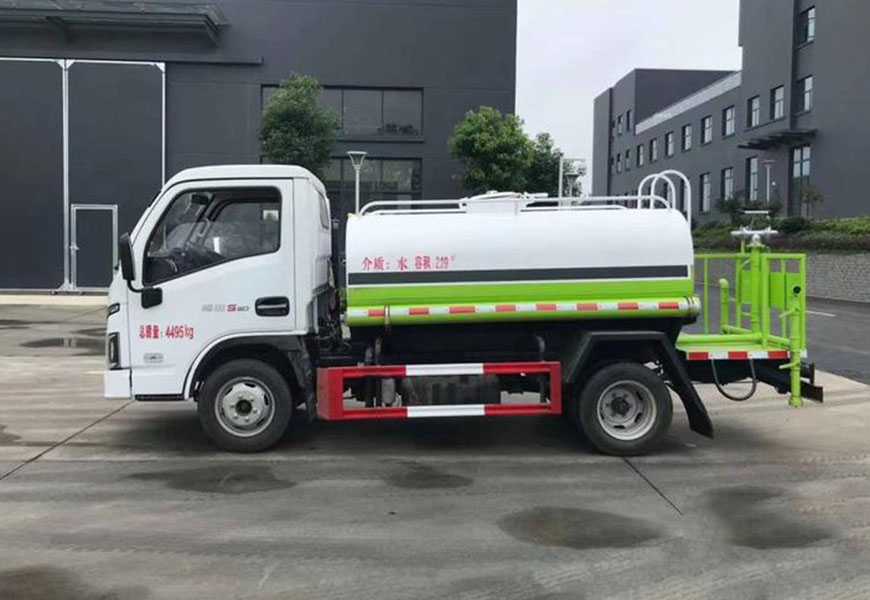
1.1 China 5000 gallon water truck for sale: product overview
A 5000-gallon (≈19,000L) water truck is a medium-duty tanker truck designed to transport water and spray it through multiple outlets for cleaning, dust suppression, irrigation, and emergency support. A typical China-built 5000-gallon water truck includes:
Tank body (carbon steel / stainless / aluminum optional)
Water pump + PTO drive (or hydraulic drive on some builds)
Spray system (front spray, rear spray, side spray, spray cannon/monitor)
Piping/valves/filters and suction/discharge ports
Control system (rear manual valves or in-cab electric/pneumatic options)
Chassis (often Dongfeng, Sinotruk HOWO, Foton, Isuzu/other export models depending on market)
Who buys it: municipal service contractors, construction companies, mines/quarries, industrial parks, landscaping providers, and fleet operators.
1.2 5000 gallon water truck price in China: cost factors and ranges
China pricing varies mainly by chassis level + tank configuration + pump/spray spec + compliance requirements. Key cost drivers:
Chassis brand & duty rating (domestic vs export-spec)
Emission standard (China VI / Euro V / Euro VI / other)
Tank material & thickness (stainless costs more; thicker plates increase cost/weight)
Pump (flow/pressure, self-priming capability, reliability tier)
Spray cannon/monitor (range, rotation, electric remote control)
Anti-corrosion treatment (epoxy lining, hot-dip galvanizing for some parts)
Options: hose reel, water meter, quick couplers, LED beacons, camera system, insulation/heating, etc.
Export packaging and documents (CIQ inspection where applicable, special crating/RO-RO prep)
If you want, tell me your destination country + required emission standard + chassis preference, and I can help you build a price-quotation checklist to send to suppliers (so quotes are comparable).
1.3 Main applications: road spraying, dust control, landscaping, construction sites
Common use cases for a 5000-gallon unit:
Road cleaning & watering: reduce dust, rinse debris, cool pavement in hot seasons
Construction dust suppression: haul roads, demolition sites, earthworks
Landscaping & irrigation support: greenbelt watering, park maintenance
Industrial/mining: yard dust control, material stockpile management
Emergency support: auxiliary water supply for firefighting (where permitted and properly configured)
II. China 5000 Gallon Water Truck Specifications & Options
2.1 Tank capacity, material, thickness, and anti-corrosion options
When comparing suppliers, confirm:
Rated capacity: 5000 US gal / 5000 Imp gal / 5000 gal “nominal” (make sure units are clear)
Effective capacity vs gross: internal baffles reduce surge but slightly affect usable volume
Tank material options:
Q235 carbon steel (common, cost-effective)
Stainless steel (304/316) (best corrosion resistance, higher cost)
Aluminum (lighter, but depends on fabrication capability and market rules)
Plate thickness: typically varies by shell/end plates; verify supplier’s standard
Anti-corrosion: internal epoxy coating, external primer + topcoat system, optional anti-rust wax for cavities
Baffles & manhole: baffle count/spacing, manhole size, venting, overflow design
2.2 Spray system configurations: front/rear/side spray and cannon options
Typical spraying layouts:
Front spray bar: wide-area washing / dust suppression in front of truck
Rear spray: road wetting, cleaning, construction site lane control
Side spray: curb/road edge watering, landscaping
Spray cannon/monitor: long-range spraying for dust control or slope watering
Options to confirm:Spray width and nozzle type (fan/jet)
Cannon range (depends heavily on pump pressure and nozzle)
Manual vs remote-controlled monitor (electric/hydraulic)
Anti-drip valves and nozzle filtration
2.3 Water pump types, flow rate, pressure, and priming method
Core pump parameters that affect performance:
Flow rate (m³/h or L/min): determines how fast you spray/fill/discharge
Pressure (MPa/bar): determines throw distance and nozzle performance
Self-priming ability: important if you will suction from ponds/hydrants
Common pump types on China builds:Centrifugal pumps (stable flow, common for spraying)
Self-priming pumps (better for suction operations)
High-pressure pump options (for strong cannon performance—costlier)
Ask suppliers for: pump brand/model, curve sheet, priming time, max suction lift, spare parts availability.
2.4 PTO, hydraulic system, and power transmission choices
Most water trucks use PTO-driven pumps:
Gearbox PTO → drives pump via shaft/coupling
Verify PTO compatibility with the transmission model
Options:Hydraulic drive (less common; useful for special layouts)
Clutch/pneumatic engagement for easier operation
Important checks: PTO ratio, noise/vibration control, guards for rotating parts.
2.5 Pipework, valves, filters, and hose reel configuration
Reliability often depends on “small parts”:
Pipe material (steel vs stainless sections where needed)
Valve quality (ball valves/butterfly valves; brand and serviceability)
Filter/strainer: protects pump and nozzles; confirm mesh size and ease of cleaning
Hose reel: manual or powered; hose diameter/length; quick couplers
Drain points: helpful for cold regions and maintenance
2.6 Truck chassis options: 4x2/6x4 driveline and axle selections
A 5000-gallon tank typically fits well on:
4x2 (single drive axle): lower purchase and fuel cost; best for paved roads and city work
6x4 (dual drive axles): better traction for construction/mining sites and muddy roads
Confirm chassis details:Wheelbase selection (affects turning radius and load distribution)
Tire spec and load rating
Brake type (air brake), ABS, retarder options
Front/rear axle ratings vs actual payload + tank weight
2.7 Engine, gearbox, and emission standards for export markets
Export orders must match your local regulation. Clarify:
Emission standard required (Euro V/VI, etc.)
Engine power range matched to GVW and terrain
Gearbox type (manual/AMT) and PTO compatibility
Cold-start / tropical cooling package if needed
Also verify if your market requires OBD, DPF/SCR, or specific certification formats.
2.8 Filling and discharge options: top filling, suction inlet, quick couplers
Common configurations:
Top filling port (with strainer basket)
Rear/side suction inlet for drafting water from external sources
Hydrant filling with quick connectors
Gravity discharge outlet for fast emptying
Confirm: port sizes, coupling standards (local standard matters), overflow and level indication.
2.9 Control options: manual controls vs in-cab/electric control panels
You can choose based on cost and convenience:
Rear manual valve bank: simple and easy to service
In-cab control: safer and faster in traffic; can include pump start/stop and spray selection
Electric/pneumatic actuation: improves ergonomics; check wiring protection and IP rating
For fleets, consider standardized labeling and bilingual panels.
2.10 Safety features: anti-slip, ladder/handrails, lighting, and warning systems
Recommended safety configuration:
Anti-slip walkway and proper handrails on top (if top access is allowed)
Ladder safety (angle, grips, anti-slip rungs)
Emergency stop (where applicable)
Reflective markings, work lights, rotating beacon, reversing buzzer
Camera system (rear camera is a practical upgrade)
Clear safe operating procedures decals for pump/PTO operation
2.11 Customization and accessories: water meter, foam, anti-icing, GPS, cameras
Common custom options from China suppliers:
Flow meter / water meter (billing/usage monitoring)
Foam mixing (for some dust control or cleaning uses)
Anti-icing / de-icing setups (usually requires material compatibility and pump considerations)
Tank insulation / heating (cold regions; confirm power source and safety)
GPS fleet management, cameras, work lights
Color, logo, decals for municipal or contractor branding
III. China 5000 Gallon Water Truck Supplier & Factory Guide
3.1 Best China 5000 gallon water truck manufacturers and suppliers
Instead of relying on “best” lists, shortlist suppliers that can prove:
Stable export history to your region
Clear chassis sourcing channel (authorized or traceable supply)
Standardized drawings (2D/3D) and BOM-based quoting
Video/onsite factory inspection availability
If you tell me your target market (e.g., SEA/Middle East/Africa/LatAm), I can suggest a shortlist evaluation template to compare suppliers fairly.
3.2 Factory production capability and water truck assembly process
A capable water truck factory typically covers:
Tank plate cutting, rolling, welding, baffle installation
Pressure/leak testing
Surface treatment (sandblasting) + paint system control
Pump/PTO installation, pipework routing, valve mounting
Electrical harnessing and control panel installation
Final road test + spray function test
Ask for photos/videos of each stage for your specific order.
3.3 Quality control, testing, and certificates (CCC, ISO, export compliance)
Common QC items you should request:
Welding procedure & welder qualification evidence (if available)
Leak test report (tank and piping)
Pump performance check (spray and suction function)
Paint thickness / surface prep records (for anti-corrosion orders)
Certificates vary by destination, but may include:ISO 9001 (factory quality management)
CCC (relevant for some domestic China categories; not always required for export)
COC / SONCAP / PVOC / etc. depending on country
Always confirm what documents your customs/registration requires.
3.4 How to choose a reliable 5000 gallon water truck supplier in China
A practical supplier selection checklist:
Quotation includes full configuration list (pump model, tank thickness, nozzle count, chassis spec)
Offers GA drawing (general arrangement) and payload/GVW confirmation
Clear warranty terms (pump, PTO, chassis handled by whom)
Spare parts list with pricing and recommended stock
Transparent lead time and production milestones
Willingness to accept third-party inspection (SGS/BV/TÜV or your agent)
Red flags: vague pump specs, inconsistent chassis info, no test process, refusal of inspection, or “one price fits all” quotes.
3.5 OEM/ODM branding, paint, decals, and documentation support
Most China suppliers can provide:
Custom paint color (RAL codes), anti-corrosion upgrades
Logo decals, warning labels language customization
Nameplate customization (within legal limits)
Export documentation pack: invoice, packing list, COO, etc.
Ask for mockups (vector decals) and paint process details to avoid color mismatch and peeling.
3.6 Lead time, packaging, shipping methods, and Incoterms from China
Typical delivery flow:
Confirm spec → drawing approval → chassis procurement → tank build → assembly → testing → inspection → shipping
Shipping options:Ro-Ro (often efficient for complete trucks)
Container (sometimes possible with partial disassembly; depends on dimensions)
Flat rack for oversized builds
Common Incoterms: EXW / FOB / CIF / CFR / DAP. Align Incoterms with who handles export clearance, insurance, and destination fees.
3.7 Spare parts, technical support, warranty policy, and after-sales service
Before ordering, agree on:
Warranty duration and coverage scope (chassis vs upper body)
Response time for troubleshooting
Spare parts package (filters, nozzles, valves, seals, PTO parts)
Remote support: manuals, wiring diagrams, video call commissioning
For fleet buyers, request maintenance schedule and consumables list.
3.8 Payment terms, inspection options, and risk control for overseas buyers
Common risk-control practices:
Use a detailed PI + signed configuration sheet as contract appendix
Set inspection hold points (e.g., after tank welding, after paint, before shipment)
Third-party inspection + photo/video evidence list
Staged payments tied to milestones (negotiable)
Clarify penalties/solutions for configuration changes or delays
Also ensure the chassis VIN/engine number and manufacturing date match what’s declared in documents.